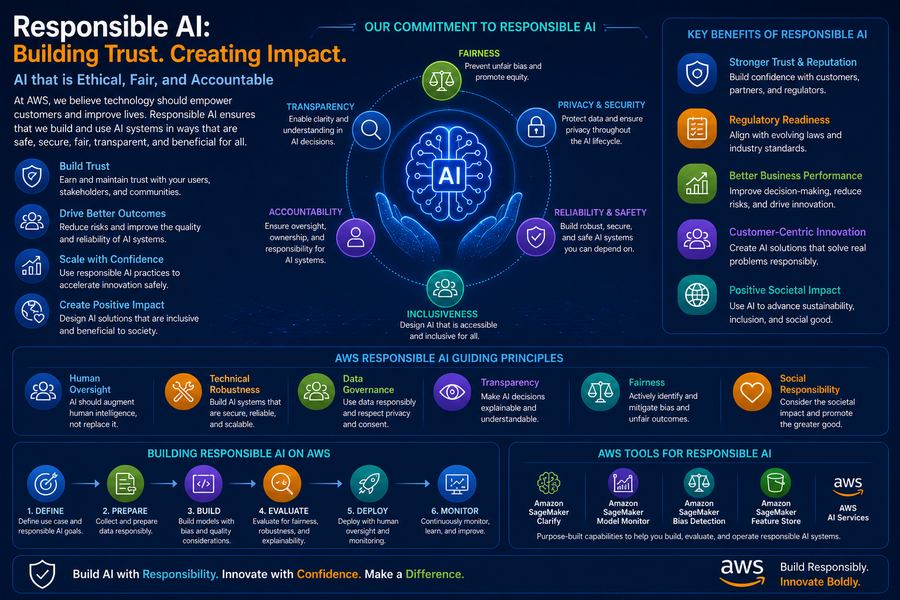
AI ethics is a branch of ethics that focuses on the moral implications of artificial intelligence systems. As AI becomes more integrated into our daily lives and business operations, ensuring that AI systems are fair, transparent, and accountable has become a critical priority for organizations worldwide.
Core Principles of Responsible AI
Fairness
AI systems should treat all individuals and groups fairly, avoiding bias and discrimination in decision-making.
Transparency
AI systems should be understandable and explainable, with clear documentation of how decisions are made.
Accountability
Organizations should take responsibility for their AI systems and their outcomes.
Privacy
AI systems should respect and protect user privacy and data rights.
Human-Centered
AI should augment human capabilities and serve human needs, not replace human judgment.
Sustainability
AI systems should be developed with consideration for their environmental and societal impact.
Understanding Bias in AI
Bias in AI occurs when algorithms produce systematically unfair outcomes due to biased data or flawed design.
Types of Bias
- Data Bias: Training data that doesn't represent the population fairly
- Algorithmic Bias: Algorithms that amplify existing biases
- Selection Bias: Data selection that favors certain groups
- Confirmation Bias: Algorithms that confirm existing patterns
Mitigation Strategies
- Diverse Data Collection: Ensure training data represents all groups
- Bias Testing: Regular testing for bias in AI systems
- Human Oversight: Include human reviewers in critical decisions
- Continuous Monitoring: Monitor AI outputs for bias over time
Responsible AI Framework
Assess Risks and Impacts
Evaluate potential risks and ethical implications of your AI system.
Design with Ethics in Mind
Incorporate ethical considerations into the design and development process.
Build Responsible AI
Implement AI systems with fairness, transparency, and accountability features.
Deploy with Oversight
Launch AI systems with human oversight and monitoring in place.
Monitor and Audit
Continuously monitor AI systems for bias, errors, and unintended consequences.
Iterate and Improve
Regularly update and improve AI systems based on feedback and monitoring.
AI Governance
AI governance refers to the policies, processes, and structures that ensure AI systems are developed and used responsibly.
Key Governance Elements
- Ethics Committee: Cross-functional team overseeing AI ethics
- Policies: Clear policies for AI development and use
- Training: Mandatory AI ethics training for all staff
- Audits: Regular ethical audits of AI systems
- Reporting: Transparent reporting of AI performance and impacts
Best Practices for Responsible AI
- Start Early: Consider ethics from the beginning of AI projects
- Engage Stakeholders: Include diverse perspectives in AI development
- Document Everything: Maintain detailed documentation of AI systems
- Test Thoroughly: Test AI systems for bias and fairness
- Monitor Continuously: Implement ongoing monitoring and auditing
- Be Transparent: Communicate clearly about AI capabilities and limitations
Case Study: Responsible AI Implementation
Company: Global Financial Institution
Challenge: AI-driven loan approval system showing bias against certain demographics
Solution: Implemented comprehensive responsible AI framework
Results:
- ✅ Eliminated demographic bias in loan approvals
- ✅ Improved fairness scores by 92%
- ✅ Increased customer trust and satisfaction
- ✅ Became industry leader in responsible AI
At DeployInCloud, we help enterprises implement responsible AI frameworks. Contact us for a free AI ethics assessment today.